Showing posts with label francoFiles. Show all posts

Thursday, March 20, 2014

Boulevard Clichy, 1950s


This painting of Paris, entitled “Boulevard Clichy, Paris,” hung in our house all of my childhood. To me, it was Paris – everything that Paris could and should be. The café –its servers and clients – the gendarme, the sailor, the Morris column (Colonne Morris) advertising the next Maurice Chevalier show, the flaneurs, the street signs. My parents acquired it, I think, during a trip through Europe in 1959 or 1960.  Hmm. Is it real or mythologized Paris of that era?

Gendarme
But it was always a bit in the background; that is, I never really studied it too closely, but rather soaked up its total Parisian-ness. Did this influence my Francophilia? No doubt. But mostly I remember wondering, at a tender age, why the words “Café- Billard-Chocolat” were backwards. And the epiphany: because we’re looking at the back side of the awning.  Brilliant young moi.

When I moved to my first apartment after college, my father gave me this painting to hang in the living room. It was an instant inspiration. I loved the frame, which is a distinctly French style that I can only liken to a mansard roof perhaps seen in some Madeline books?): the edges curve up toward the center. I loved the bustling street life of Paris. The Modiste, the Cinema, the Société Générale, everything.

By the time I moved to Paris for three years, I had carefully placed the painting in storage. It wasn't until after my return that I studied it anew. Wow. Some revelations.

1. First, it really is a kind of “Where’s Waldo?” (Ou est Charlie?) of Paris café/street life in the late 1950s. So many details to discover.

French sailor with red pompom hat
2. Second, the artist got a number of details wrong. I count at least three, and that’s without spending too much time on it. Can you spot them? (I don’t include sloppy painting details -- such as the man’s umbrella impaling that poor woman -- in this tally.) It makes me wonder if it was painted en plein air or from memory.  Zoom in and check them out and tel me what you think.

3. I have figured out (I think) that this was painted from under the canopy at the famous Wepler. It certainly had a café and billiards at the time.  Any thoughts?

4. The cocher (coachman) and horse were about to become extinct. The last horse-drawn carriage in Paris (from the original fiacres) was in 1965.  There have been some attempts at tourist-y revivals since then.

5. The man in sunglasses reading a newspaper entitled La Bourse Parisienne may have indeed been reading about the stock market, but there was no such newspaper, so maybe he was using that as a cover? On the other hand, the guy hawking Le Rire is valid; it was a satirical journal published in Paris through the late 1950s.

But some things never change.  I love this lady feeding her dog at the table.


I think I might make this the new banner for Polly-Vous Francais? Just because. What do you think?

Thursday, August 29, 2013

That first magical summer in France, 40 years ago?

Forty years.

Forty years ago today, I boarded an Air France flight at Orly to return from France to the U.S.  It had been a magical summer. My first time ever in France. A life-changer.

That June I had graduated from high school and had gone on a three-week whirlwind tour of Romania with my school glee club.  In anticipation of the flight's stopover in Paris, earlier that spring I had begged my parents to see if they knew anyone in France with whom I might spend some or all of the summer.

Hooray!  As it turned out, there was a family.  Friends of friends had lived in Paris working for Time-Life; eight years before, in 1965 when they were leaving Paris, they had brought along a lovely young Parisian, Marie-Noelle, to Connecticut as an au pair so that their children could keep up their French.

Fast forward to 1973: Marie-Noelle was now in her late 20s, in Paris, married with a baby of her own.  Her extended family (grandmother, parents, and sisters and their families) spent the summer on Ile de Ré.  They would be delighted to have me as an au pair for the summer.

Back then, a fille au pair was not hired help, not a euphemism for a nanny.    Au pair meant on a par.  (In fact, I was never paid a cent.  In retrospect, I should have paid them.)  From the beginning I was treated as a younger sister or cousin, completely part of the family, who earned my keep by lending a hand with the children and household duties, mostly with the assistance of Mamita, the grandmother.

For eight weeks I was immersed, submerged in French family vacation life.  Upon my arrival, they asked if I would rather speak in English or French.  "En francais!" I blurted rather vehemently.  Oh-so-politely, not another word of English was spoken to me all summer.  (Except most evenings when Marie-Noelle's husband Jacques would re-re-fill my wineglass at dinner, joking, "Just a leeeetle drop, Pollee?")

It was a summer of transformation.  Twelve years of classroom French, filled with Moliere and Sartre and verb conjugations, rapidly transformed into must-use everyday French.  Who the heck knew what a biberon was?  Une couche?  I thought une couche was a layer. Baby bottle and diaper.  Got it. But in short order the learning curve became so fast I didn't have time to translate:  I just had to figure it out.

Example:  I knew the word for floor was le plancher.  But when someone said "Tu peux mettre cela par terre," I had to do some quick mental leaps to figure out that it meant "Put that down (on the ground)."  Finally the mental leaps were arriving at such locomotive speed that I put away my mental French-English dictionary and just went with it.  And French food and cooking lingo deserve their own chapter...

I had to keep up daily with spoken French on all levels:  toddler and pre-school age; vivacious sophisticated Parisian 20-somethings with their large entourage, with full-on colloquialisms, at dinner or dancing at island nightclubs or sailing; kind and worldly grandparents whose English far surpassed my faltering French; and the clear-speaking but cryptic Loma, the ancient, tiny, widowed great-grandmother swaddled in black. To me, it seemed Loma parsed out wisdom in 19th-century French haiku.

But it was far more than just a language-learning experience.  For 8 weeks, every minute, every hour was an awakening.  This life is what I was meant to know, I thought.  This is where I belong. French beach picnics -- feasts, not just sandwiches! -- boat outings, everyday summer dinners, daily shopping, meal preparation, everything about French lifestyle was both eye-opening and instantly right. The pace of life and the focus. I found my true sense of self.

I was eighteen.

Reality check:  1973:  no cell phones, no internet, no TV on the summer island; and a long-distance call was prohibitively expensive, ergo was for emergencies only.  Thus my only communication with American family and friends for eight weeks was via postcard or aerogramme.  Bless my mother, who saved all my letters home.  By mid-summer my English syntax was down the drain, and the vocab was slipping:  "We go every day to the plage with the children,"  I wrote.  I wasn't putting on airs, I was losing myself in French and France.

And that is how I really learned French. I lost my American self in the French world.

I think I never fully returned.

Oh, I physically returned to America on that Air France flight 40 years ago.  I had flown from La Rochelle airport to Le Bourget (I think).  I know I took a connecting bus to Orly.   Gilles, my handsome summer-unrequited-crush who had spent many July and August weekends as a guest with the family, was waiting for my bus as it pulled in to the bus lane at Orly (he worked for Air France, as had his uncle, Antoine de St. Exupery). Belmondo-esque, he stood at the entrance, one leg perched on the barrier, leaning and smoking a Gauloise. My heart fluttered.

I attempted to haul my embarrassing, oversized, orange, too-American Tourister suitcase from the luggage compartment of the coach.

"Laches," he asserted gently, grabbing the handle.

Lâche raced through my brain, seeking quick processing.  Lâche, poltron, couard, peureux went the brain scan in a nanosecond from senior-year Advanced French language class when we had to memorize synonyms.  Why was he calling me a coward? My heart pounded.

"Laches," chided Gilles, tugging more firmly.  I finally released the handle to him (which was what he was in fact saying: "Let go"), banking on the body language, still unsure why I was a coward. Did he think I was grasping so tightly because I was embarrassed at the weight of my suitcase?

He bought me an Orangina, got me checked in with his svelte, perfectly perfumed young French colleagues at the desk, and finagled as much VIP treatment as a junior Air France worker could finagle.  After some final chit-chat, address exchanges and "Oh yes, we'll keep in touch" banalities, he accompanied me to the gate.  A total gentleman, truly and genuinely so.

It didn't register -- actually at that point, I couldn't really fathom what it meant -- that I was leaving France and returning to the States.  A seven-hour flight was not enough time to adjust, linguistically, emotionally, or culturally.

I had become a different person.  I was still Polly, but who was she?

Three days later I was sitting in a freshman "French class" in college in Connecticut: nothing French about it, at all, really.

Lost.


related posts:

Mamita

Unlocking
the French R

A la plage


Friday, May 31, 2013

Do You Love Paris Street Signs?

Tell me.

Do you really love Paris street signs and French metal signs in general?

If you are like me and adore all of them -- not just the classic plaques émaillées with the street names, but also the house numbers, the Pietons signs, the Sens Interdit signs, well.  Have I got a treat for you.

On rue des Tournelles today I came across the Gallery Art Jingle and an exhibit of a fabulous artist, Fernando Costa, now know just as Costa.  If you haven't heard of him already (he is quite famous, at least in France), his medium is reclaimed metal, mostly signage.

All inspirational and on top of that, just perfect for any francophile.

To top it off, it turns out that he is also designing this year's Art Car for the 90th anniversary of the renowned Le Mans race, and the car will be unveiled tonight!

If all this creative art is too hi-falutin' for you, and if  you just want some street-sign memorabilia to take back home... well, let me see.  You can always, ummm, buy this men's shirt, seen shortly thereafter on rue de Turenne.

Monday, May 06, 2013

Mystery Photo du Jour: French technology

Okay, well, this isn't a mystery photo for anyone who lives or has lived in France; and you know who you are.

So, no fair guessing in the comments section!

But I came across these two devices yesterday in my embarrassingly outdated, overflowing-with-ancient-bits "technology cords and accessories" bag, and they automatically struck fear in my expat heart.  I still can never figure out how they were supposed to work in France.

 Two or three coupled together at times. Maybe let's add more!?  Never, it seems with the desired results.

And I sure don't need them in the U.S.  Anyone want them?


Sunday, March 10, 2013

Polly-Vous Francais: Very Pinteresting

It's a challenge, some times, to keep up with all the latest digital connection places.  Back when I was a digital neophyte in 2006 and started this blog, the world of bloggers was a small one and often under siege by the mainstream media.  But as a group we hung together, and no other group hung together better than the bloggers for the Paris Blog. And now, we old-world bloggers are SO thrilled that the mainstream media have joined our ranks.

But  -- wow -- how to keep up with all the new media?  And, umm, I now have a day job.  As technology and cool social media sites have proliferated, I've done my best to keep abreast of all the sites for communicating my message.

This blog of course, has a Facebook page, and if you haven't yet liked it, I encourage your participation.

I am also on Tumblr (for which I have a kind of visceral aesthetic love), and Twitter, which I attend to in fits and starts.

I am even on etsy and ebay, should I ever find the time to sell some of my French trouvailles. Working on it!

But when I joined Pinterest, I was irked, annoyed, upset to see that someone had taken my name, "Polly-Vous Francais," to use for one of her Pinterest pages.  Awkwardly, I do also have my own, authentic, Polly-Vous Francais  Pinterest account.

Why would anyone want to siphon credit, SEO, and Google page hits from my personal blog, which has spent six years delivering knowledgeable fun and news about Americans and their relationship with France?  Especially since this other person who copied my copyrighted nom de plume is not named Polly in real life and has never even lived in France?  Polly-Vous Francais is my personal brand, built with pride and quality and a true raison d'etre.

I've left a few comments on her page, asking for a name change. A few loyal fans have done the same.   No response.  Naturally, I'm not encouraging readers to flock to her page because that will only increase her page hits.  Arrgh!   But I wish that common courtesy still existed in the cyberworld.

What do you think?  Next steps?

Friday, March 08, 2013

Paris Reborn: the making of Haussmann's Paris

Those who know and love Paris, and think they know all about haussmannien architecture in Paris, will be delighted and informed at an unimagined higher level when they read the absolutely splendid new book by Stephane Kirkland, Paris Reborn:  Napoleon III, Baron Haussmann, and the Quest to Build a Modern City.

I am only three-quarters of the way through the book, which to me is a gripping narrative, a page-turner. If you love Paris as she exists today, you will simply devour each page.  Stephane Kirkland takes his readers through beginnings of Paris modernization and through the city's massive transformation during the Second Empire.

A few highlights:

"Napoleon... had a large new slaughterhouse built on the edge of the city, with one important consequence:  As of September 15, 1828, it became prohibited to drive cattle through the center of town."

Ponder that for a few moments.

Or Queen Victoria's comments on her visit to Paris in 1855:  "What could I say about this most wonderful city in the world?" in an era when Paris was first learning what it meant to be a tourist destination.

Or Baron Haussmann's disagreements with Hittorff.

There are far too many excellent chapters in the life of  19th-century built Paris to enumerate here, so I simply recommend the book. Over and over.

Kirkland captures the drama, both social and political, and opulence of Paris in the mid-nineteenth century, and begs the reader to ask what Paris would have become if Baron Haussmann had not persisted in his determination to carry out the expansive and visionary urban-planning ideals of Napoleon III.  

For those who love Paris today-- all the many millions of you -- this book is a must-read.  You will always walk down the streets and grand boulevards of Paris henceforth with a knowing and appreciative understanding of how they got to be where they are today.

For those who yearn to know and discover Paris, this is a superb architectural primer on the creation of the most beautiful city in the world. (Yes, of course I'm biased.)

Official publication date is April 2, but you might not want to wait that long to order it.  Ask me!

Friday, March 01, 2013

How to Walk Like a Parisienne

Ladies, have you always longed to acquire the allure of a chic Parisienne walking along the Place Vendôme or the Champs Élysées?  Me too!  I adore walking, and especially walking in Paris.  The best exercise of all.

Here are a few tips, with photos to illustrate.  Oh, well, yes... they are from a Madame Figaro article from the late 1940s, liberally translated by yours truly.  But really, has that much changed?  Read on! (I'm off to do my basket-balancing exercises.)


Grace and physical allure are qualities that are more precious than the beauty of face or body. And did you know that nothing reveals more about the inner you? A physical bearing that is confident, free and easy, will never belong to a shy woman; and men simply are not drawn to a woman whose demeanor proclaims grumpiness.

There are nevertheless exercises that can help you achieve that allure: practice walking with basket on your head, juggling, jumping rope, walking on tip-toe.

Walk without hurrying. Relax, throw your shoulders back, plant the sole of the foot on the ground, and walking will be, even in the city, the most beneficial sport of all.

Don’ts (illustrated in photos):

1.  Certainly we have to open our stride from the hip, but, ladies, please:  taking “giant steps” is not pretty. And bending the knees makes walking exhausting.

2. L’air perché – the heel touching the ground before the toe reaches the pavement. Non, non!  And where is this pocketbook going, grasped in the fist like a dangerous projectile? And where is this doll going, arms and legs akimbo? Slow down!

3.  Oh, dear.  Drooping shoulders, hunched back, hollow chest, head bent over… this demoiselle glumly counts the cobble stones. This posture is just so sad.

4. Right-left, right-left, 2-3-4. Oh, no!  The hips swing back and forth, taking the jacket with them in their movement. Nothing less gracious than this swaying.

5.  Over-arched derrière, chest forward, arms going nowhere.  Does this young woman hope that her nose will arrive before she does?

The couture has certainly changed in the past 70 years... but does the posture advice still hold?

Monday, February 04, 2013

Patron Saint of Paris Taxi Drivers to be Honored

Taxi drivers in Paris are the stuff of legend.  And urban myth, too, perhaps.  In all my Paris taxi rides, I have had only one driver who was less than wonderful.  (That is, when I could actually get a taxi.  But that's another story, and a long one.)  I know that other people will differ with me;  maybe I've just been lucky?

Or maybe St. Fiacre was looking out for me.

Who in tarnation is St. Fiacre, you ask?  Why, he is none other than the patron saint of French taxi drivers.  And this week he will have a new statue in his honor unveiled.  The term fiacre was used originally for the early horse-drawn carriages for hire in Paris.  So the next time you need to hail a cab in Paris, maybe if you make a special pryaer to St. Fiacre, it might help.  Can't hurt.

God bless that St. Fiacre!

I've had lively discussions about literature, politics, current events --- and, of course, the weather -- from the backseat of a G7 or Taxi Bleu.  A few accounts of my interactions with Paris taxi drivers:

1. I telephoned one to fetch me at my apartment on the place de la Madeleine, and the driver said "Non, Madame, I cannot -- there is a manif  [street protest] in your neighborhood and the traffic is blocked." (His taxi stand was around the corner, so he knew what the real situation was, but he was apparently acting on official traffic reports from the Prefecture de Police). I said, "Monsieur, I must tell you, I have the best view of the Madeleine of anyone, and I promise you that the traffic has completely cleared up. In fact, feel free to call me any time if you want a really good traffic report!" He perked up and said, "Okay, I'll be there in 2 minutes."

2. Another day I was bringing home two antique wooden chairs I bought at the Marche aux Puces in Vanves, and although I called the number for extra-large taxis, a regular size taxi showed up. The driver snarled, "You are moving furniture. Do I look like a moving man?" "No," I replied sweetly, "you look like a very kind chauffeur de taxi." He melted like butter. Even helped me move the chairs into the vestibule when we arrived.

3. It is after midnight. I am riding home in a taxi from a farewell dinner. "Brrr. Il fait froid," says the driver. "Moins 2." We make pleasant chit-chat and I note with irony that just as I'm leaving Paris I'm beginning to recognize the Celsius temperature readings without a mad mental scramble to do the math.

The car slides silently along the quai, past the Statue of Liberty on Ile de la Cygne, past the high-rise apartments across the Seine in the 15th. "How can I ever replace this?" I wonder. Even the mundane modern buildings take on importance. Suddenly the Eiffel Tower surges into sight; its brilliant blue lighting is breathtaking. For a brief moment I consider asking the driver to stop so I can take a photo, but it's too cold, I'm too tired, and I would have no way to upload it when I get home, because there is nothing left in the apartment.

4. And this, my all-time favorite.

This anecdote is the only less-than-wonderful experience:

After one Saturday dinner party in Paris, it being late I decided to take a taxi home. The reluctant driver picked me up -- I was his last fare of the evening -- and we drove from the Champs Elysees to my place in the 7e arrondissement. We arrived at my doorstep and I explained that all I had was a 50-euro bill. You would have thought I had committed highway robbery. I got the most severe tongue-lashing, with expletives, him furiously spouting, "If I had known you wanted to pay me with a 50-euro bill, I wouldn't have picked you up," and so forth. I apologized profusely, to no avail. Finally, he gave me the change for the 11-euro fare -- change which he had in abundance, it turns out.


Do you have any Paris taxi stories?  Any prayers for St. Fiacre?


Saturday, December 29, 2012

A New Year's Eve a la Francaise

Rewind to a few decades ago.  A young-ish Polly-Vous, ever the francophile, had been invited to attend a coveted New Year's Eve reception for le Reveillon du Jour de l'An at the French Consulate in Boston, at 10 p.m.  Complete with an engraved carton d'invitation.  Ready to impress her new-ish Beau with that prized invitation, she invited him first for dinner at her Beacon Hill apartment.   Her roommates were away, and she was eager to demonstrate her nascent culinary skills for a divine and romantic repast.

She set to work for an entire day on her favorite recipes from her favorite French cookbook, the Tante Marie.  The Tante Marie was and is the French counterpart to the Joy of Cooking or Fanny Farmer's.  Unadorned, classic French cooking.

The Beau arrived at 7 p.m., and they had kirs and salted nuts.  Then, mussels for a first course. Polly had carefully debearded and scrubbed the mussels; then chopped shallots and sauteed them lightly in butter in a deep pan, added the mussels and a cup of Entre-Deux-Mers. When those wine-steamed blue-shell bivalves opened, Polly and her Beau devoured them, and mopped up the dripping, savory sauce with chunks of crusty baguette.

Already this was heaven.

Add to the scenario candlelight on silver candelabrae and a crisply ironed damask tablecloth and napkins, and Puccini soaring in the background.  Fire in the fireplace and quaint lights of Charles Street twinkling outside the window.  Magic, right?

Next, Polly prepared a filet of sole au gratin, with the slightest whisper of bread crumbs and butter, baked then lightly broiled.  Creamed spinach and parsleyed steamed potatoes.  A Sancerre to accompany.

For the pièce de résistance, she had whipped up choux à la crème -- because Tante Marie had taught her how easy it was to prepare.

By 10 p.m. mademoiselle Polly and her Beau were (to be stated undaintily) completely stuffed to the gills.  But they were rapturously happy, holding hands in the flickering silver candlelight.  With a slight moan and a forced heave-ho to get to their feet from the dinner table, Polly and Beau donned their overcoats and set out in the New England frosty air to conquer the six blocks to the French Consulate on Commonwealth Avenue.  Ready to hob-nob with the elite francophile crowd for an elegant glass of champagne and a festive midnight bisou.  Polly was confident that this would let her Beau appreciate her many, many merits, on oh-so-many, many levels.

The couple was greeted at the door by Abdel, the consul's major domo, and welcomed by Monsieur and Madame le Consul in the glittering and elegant Back Bay mansion that was home to the consulate.  Polly introduced the handsome Beau to Monsieur and Madame, and she politely shrugged off her overcoat to Abdel, to emerge in her shimmering dress.  She was ready to subtly demonstrate that, although an Americaine from Boston, she had the sophistication and social wherewithal (tra-la!) to know how to be a gracious guest at a diplomatic party a la francaise.

And then Polly saw it.

Gasp.

IT.

The most impressive array of the best and most exquisite French cuisine, spread out among many tables, as far as one could see.  Foie gras, glistening chilled oysters, smoked salmon, caviar, hams, roasts, cheeses, blinis, fruits, tarts, pastries, chocolates.

(Egad!!  This invitation had been for dinner?  At 10 p.m.?  Who knew?)

With a graceful flourish of the hand, Monsieur le Consul beckoned Polly and her Beau to dine at the buffet.

Oof.

Polly exhibited a wan, green-ish smile and, in an effort to not appear not worldly, carried a small empty plate across the stands of sumptuous offerings.  Handsome Beau heroically speared a slice of ham, which he then ignored for the duration of the evening.  They wandered under the crystal chandeliers of the salons, smiling and chatting with various VIPs Polly recognized, hoping to avoid the scrutiny of the multitudes of knowing invitees who had been starving themselves for 24 hours in anticipation of this astounding French culinary and social event.

And overstuffed as they were on Polly's beginner Tante Marie home cooking, neither of them could bear to eat one morsel of the exquisite French gastronomic feast.

This, my friends, is torture.

To top it off, when midnight tolled, Polly found herself not next to her Beau, but instead, elbow-to-elbow with her arch-nemesis, and was forced to give a saccharine, champagne-laced, Bonne- Annee cheek-kiss to that dowdy, powdery, simpering old lady.  Indignation meets indigestion.

A New Year's to beat all New Year's.  Unforgettable.

But always a great tale to tell!

And so, dear friends, here's wishing all of you a brilliant and shining 2013, with many French delights and memories to savor.


image via amazon.com.


Friday, November 30, 2012

French Films with English Subtitles

As an ardent francophile, I've loved French movies since I can remember.  So I finally learned enough French to catch up and be able to understand French movies in French.

Alas, the same is not true for many English-speaking francophiles around the world whose French isn't quite up to the task of understanding a French film without subtitles.

Double-alas:  too many wonderful French films that don't reach the mass-distribution market abroad are missed by these francophiles because the films are rarely released with subtitles in English.  Even worse, they are not available in France to the non-francophone population.  Honestly?  I don't get it.  Why not share the culture even if others don't get the language?  Really, think of the scores of Amurican movies that are subtitled in French for French audiences each year.  Why not subtitle French movies for American/all-other-anglophone-audiences?  It might help to bridge the cultural gap!

Yet these French films, which convey the sauce and substance of daily French existence, and the comedy/tragedy therein, are virtually unavailable to those who do not speak the language.

With one exception, at least this week.

Enter In French With English Subtitles, a New York-based group that for the past several years has been offering a French film festival featuring some of the sweet and wonderful French films that don't hit the mass-market distribution cinemas in the U.S.

Tonight is opening night of the In French With English Subtitles festival.  Because I'm a procrastinator I've been crazy busy at work the festival is such a hit, I didn't get to score a ticket for tonight's opening Gala with Gad Elmaleh.

But there are lots more for New York-based audiences to view this weekend.  Some for the first time in the U.S.  And with four screenings each day on Saturday and Sunday, there are many great films to see.  I can't wait.

Get your tickets while they last!

All screenings are at the Florence Gould Hall of the French Institute Alliance Francaise, although the festival is not a part of FIAF programming (i.e. no reduction for FIAF members).

55 East 59th Street
Between Park and Madison Avenues
New York, NY 10022

Monday, November 26, 2012

An Award for Books about France!

If you've read this blog with much frequency (and of course you have!) you'll know of my unending love of books written about France -- or the discovery of some aspect of France -- by Americans.

Over the last two centuries, many great (and some not so great) works have been written for the anglophone world to explain or showcase France in a way that helps them appreciate or understand France a wee bit or a lot more than they did before.  I have kept a personal library of them, made a habit of collecting and reading them.  To see the vast numbers of books that I have written about in my casual way, check here, or simply click on the category "literature" in the column to the right.

This year I was dreaming and scheming about the fact that this literary genre -- whether fiction, non-fiction, or coffee-table book -- should be awarded a prize in the great tradition of literary prizes.  I came up with a well-laid-out plan. Alas, I did nothing with it but mention it briefly to a CEO of a New York-based French non-profit.  Busy with the day job.  I figured, I'll get around to it.  But great minds, apparently, think alike.

So imagine my delight last month when, at a NYC gathering for my beloved American Library in Paris, I heard the announcement from Director Charles Trueheart that ALP is now sponsoring the American Library in Paris Book Award.  The award will be given each year to  "...the best book of the year in English about France or the French-American encounter."

It is, quite simply, thrilling to have the genre recognized and awarded and by such an august organization and writers' council.

A vos plumes, everyone.  A vos plumes!

Sunday, October 28, 2012

TV5 Monde to the rescue...

Here on the island of Manhattan we are gearing up and battening down in anticipation of the arrival of Hurricane Sandy.  Who knows what the storm will bring -- will it be Frankenstorm, the epic storm for the history books?  Will it be just a lot of water from all angles? Will we lose power?

Stay tuned.

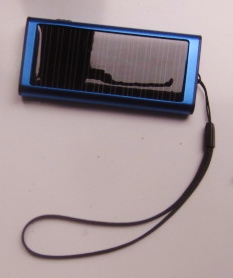
Meanwhile, I am delighting in a little gift-bag goodie I received two weeks ago at the annual meeting of the Federation of Alliances Francaises in the U.S.  A number of corporate sponsors had interesting (or frivolous) logo-stamped tchochkes.


But none were more timely or more potentially helpful right now than TV5 Monde's gift of a solar-powered phone charger.  It's warming up by the window.

I adore watching French TV in the US via TV5, and this is another reason to love the company.

Merci, TV5!

Wednesday, October 24, 2012

Trick or Treat, Parisian Style?

Are you tired of the same old same old to hand out to trick-or-treaters on Hallowe'en?

Do those pound-and-a-half bags of mini Snickers, Mounds or Mr. Goodbars make you yawn (or stress from the conviction that you will. not. open. that. bag.)?

Are you a francophile who yearns to convey a sense of French culture and refinement to all those goblins and princesses and Where's Waldos who ring the doorbell?

Oui, oui, you say?  Here is your dream come true.


Voila! Eiffel Tower gummy candies.  You can order them here.

And yes, indeed,I have taste-tested them for you.  I received them in a goodie bag recently at a French conference.  Okay, all right, I finished off the whole packet once I got home.  


Tuesday, October 23, 2012

O Bescherelle, My Bescherelle!

I just commented to a friend on Facebook, "I used to sleep with my Bescherelle under my pillow the night before French exams."

And -- whoosh! -- a Proustian slew of ancient memories rushed in.  Le Bescherelle, my saint, my foe, my best friend, my nemesis, for so many years of studying French.  The slim, ever-solid volume in familiar red, slightly rounded at the corners from years of use and abuse.  In it:  the art of conjugating over 8,000 French verbs.  The Bescherelle:  it bolstered me, intimidated me, confused me, reassured me as I tried to master the intricacies of the subjonctif, the passé simple, the plus-que-parfait.

And that was what I called it -- mon Bescherelle.  Yes, it turns out that "Bescherelle" is considered a common word in French, just like Kleenex or Band-Aid in English.   Do we have an equivalent for a such grammar and language bible in English?  Maybe "my Strunk and White?"

I still have my original Bescherelle, somewhere deep in storage. (With all my books; long story.) I think it was a required purchase in 10th or 11th grade.  Long after donating my French-literature survey and other textbooks to rummage sales, my beloved/despised Bescherelle remains as much a part of my permanent library as my Webster's 7th Collegiate or my Petit Robert.

And Bescherelle is now also very 21st century, I'm glad to see.  Check out bescherelle.com for immediate on-line answers on conjugation of French verbs, and much more.

P.S. My newly-discovered secret French-geek spelling fun activity on bescherelle.com is to do the middle-school level dictées.  My scores are pas mal.  And it's free!

Merci, Bescherelle!

Friday, October 19, 2012

French Chic Book Giveaway

Weee-o!  (Or in French, ouais!) 

This is my first ever book giveaway!  In the past I have been supplied with books to read and review upon occasion; but this time the generous folks at Simon & Schuster have sent me an extra book to offer to readers of Polly-Vous Francais? in a Book Giveaway!

Drum-roll, please.

And this is not just any book.  It is Lessons from Madame Chic:  20 Stylish Secrets I Learned While Living in Paris by Jennifer L. Scott.

Okay, well, damn, I thought when I first heard about this book.  Or "Sniff!" as I wrote to the lovely  Simon & Schuster publicist who offered me the advance review copy, "This was the book I was going to write," I whined.  "Oh well, she who hesitates... blah blah."  So I swallowed my pride (and that half-written manuscript) and eagerly agreed to read the book and offer a book giveaway on ye blog.

Mardon me, Padame, but how the h** does one do a book giveaway?

Keep reading.

Of course one googles the phrase "Book Giveaway" and then picks from the best of the ideas and marches onward.

And so I present:  the Polly-Vous Francais first-ever book giveaway!

Are you still awake?  Would you like a free book?

If you'd like to learn how to be chic like the French women in this book, and get a free book which gives you all the details, simply leave a non-spam, non-anonymous comment below.  And while you're at it you can "like" our Facebook page!   I will print out all the names and cut their email addresses in little strips of paper and then place all the names in a beret before November 6 (the release date of the next edition) and then I will ask a random friend to extract the names from the beret.  Then the winner, selected at random, will be contacted.  Said winner will have to have enough confidence that I am not an axe-murderer to give me her (or his?) mailing address, and then I will send that winner a pristine copy of the wonderful Lessons from Madame Chic.  And I'll actually pay the postage.   And I actually promise to put it in the mail, unlike most of the other letters on my desk which have been languishing in the "to be mailed" pile for lo these many months.

But don't stop reading yet. You need the preliminary review!   Lessons from Madame Chic arrived in this afternoon's mail.  And I can't put it down.  It is a fabulous look at French savoir vivre.  Jennifer Scott never attempts to generalize or make stereotypes, but simply offers one view of chic French life as she observed from a year living in Paris with Madame and Monsieur Chic in the 16e arrondissement.  She balances it with great observations about Madame Bohemienne in the 11e.  No broad-brush "the French are this or that" statements, but simple and astute observations from her year in Paris.

I like that.

I think perhaps some cultural/social evolution has happened since the author first spent her junior year in France (most chic French women now wear jeans?), but this book is nevertheless a great resource, with helpful tips on how to incorporate French chic and practicality into your everyday life.  In every realm from fashion to food to family living to feeding your brain, with chapters such as "Exercise is Part of Living, Not a Chore." You'll be glad you read it. And I think you'll keep it on hand as a reference book.

So, my friends, submit comments below (and "like" us on Facebook for a plus) to qualify to win a free copy of Lessons from Madame Chic!  Comments (or new Facebook "likes") must happen before November 5.

The winner will be informed by November 6.

Sunday, October 14, 2012

Announcing David McCullough's Next Book: Americans in Paris, 20th Century

Breaking news!  This weekend, historian and author David McCullough announced  -- for the first time to the public -- the subject of of his next book:  Americans in Paris from the early 1900's to 1930.  The theme, though, will be fascinatingly different from all other tomes on those all-too-famous Yanks in the City of Light.  His will be a study how the nascent technology of aviation influenced their lives and vice versa.

Speaking at the annual meeting of the Federation of Alliances Francaises in Providence, where he was receiving the coveted Prix Charbonnier for his most recent work on Americans in Paris, The Greater Journey, Mr. McCullough unveiled his latest project.  Realizing, in Paris during a 4-day taping for 60 Minutes, that writing about Paris was in his heart, he knew his next book also had to be about  Americans in Paris in the 20th century.  "But," he said, "I was faced with the problem of 'How can I make it different from so much that has been written?  I cannot go down the same old path about Hemingway, Fitzgerald, and Gertrude Stein, etc. etc.'   I knew it could be done and I knew that there were so many more people than those clichés that they had become, alas.  But what would make it work?  And inform?  What was the perspective or lens through which I could look at this period that would be different?  And then, one day, came one of those moments where suddenly it hit me.  And, honestly, it just lifted me out of my chair.  And that is: aviation.  The advent of flight.  The advent of the airplane.  The most emblematic development of the 20th century."

Here is a brief glimpse of him reading the first page of his new book, describing Edith Wharton in Paris as she witnessed the first airplane to ever fly over Paris,on Monday, October 18,1909.

The video is truncated, alas.  I had to focus on the talk.  Page one had me completely spellbound.  Afterwards, Mr. McCullough said to me, "Well, Polly, if your face was an indication, I guess it will be a hit."


Sunday, October 07, 2012

Classic French Corkscrew

The season of the vendange, the autumn grape harvest, is winding down in France.
Which reminds me.  Have you ever seen one of these?

Whenever visiting friends asked, "What totally-unique souvenir shall I take home from France?" I marched them right down to BHV.  To the beloved basement, warehouse of All Things French.  To stock up on these French corkscrews for their friends and family.

One reason?  This is literally a piece of France:  wood from old French vines transformed into a corkscrew, called a tire-bouchon cep de vigne:  literally vine-wood pull-cork.

Another reason:  each corkscrew is unique, for obvious reasons.  Created by artisans. 

One aspect of the appeal of the tire-bouchon cep de vigne is difficult to explain until you have one in your hands:  the heft of the thing feels right, and the curve of the vine in your hand makes you feel like opening a bottle of wine is a bit of a ceremony.

Which, of course is as it should be.

Sunday, September 30, 2012

Dreams of Owning a Tiny House in France

I am not alone, I think, in having the dream of someday owning a house in France. A small "pile of stones" that I can call my own.  Ah, yes, with a deux-chevaux parked outside, and morning baguettes from the local boulangerie.

a bergerie
Part one:  the history

My first infatuation with the notion of living in a small stone house in France came when I spent the summer between high school and college on Île de Ré.  The main house of the compound was a larger residence, but within the walls of "Les Bergeries" were many small stone outbuildings, which each of the grown siblings had adapted for individual families' summer living.  I was hooked.

A year or two later, I experienced the life of a young Frenchman's "second home" in Brittany, complete with the 2 CV. Primitive, but certainly doable.  And cheap!

Since then,  I have come so close -- SO close! -- more times than you can imagine,  to owning a small place in France.  First was the house in Theneuil, during a summer spent in the Touraine in the early 1990s.  I was within a hair's breadth of purchasing the crumbling small rectory next to this church, complete with outbuildings and gorgeous stone courtyard.  After lengthy discussions with the mayor of the village, I was not certain of the fate of  the property's ancient stone wall, possibly to be torn down for a road widening. I sadly, ultimately, backed down from making an offer.  The price at the time was 70,000 FF, about $14,000 at the time. Awful end of story:  I bought a used Saab instead.  To this day, of course, this missed opportunity will always be referred to as my "Saab story."

The Maison de Poupee in St Enogat
In 2006, I fell in love with another tiny house, in Dinard.  I was staying with my dear friends Isa and Jacques; and since I was always the early riser in the house, I would go on my habitual hour-long morning walks through the town just after dawn, and return with baguettes and croissants for the family breakfast.  One morning on my perambulations, I wandered through the area of Dinard called St. Enogat.  That particular day, a woman leaned out of her second floor window and remarked cheerily, "Vous etes matinale!"  ("You're up early!").  I waved and smiled and continued on my way. Shortly thereafter, I stumbled across a small side street with the charming name of Passage du Beausoleil. Ah. If I could ever find a place to live on a street like this, it would be perfect, I thought.  And 20 paces later, behold:  a For Sale sign on a perfect little house.  This time I meant business.  I was living in Paris and was looking for a permanent residence in France to own and call home.  I called the agent.  I viewed the maisonette.  I took Isa and Jacques to visit and offer their opinion.  I made an offer. Signed the papers.

I became known among the local friends as "the woman who went out for baguettes and came home with a house."  My kind of fame!

The view from the little house in St. Enogat
Well, a long story made short:  the owner died, the unhappy and unwilling tenant flaunted a scary machete in the kitchen.  The sale never took place. Expensive lesson learned:  purchasing real estate in France is not even vaguely similar to purchasing real estate in the U.S.  Even if you speak French fluently.  Even if you have friends in the neighborhood.

And yet the dream lives on.  Whenever I tootle around the back-roads of France I always experience real estate envy.

Part two:  real estate envy.

Sshhh.  Some of my friends call it real estate porn.  It is just as addictive, so, well, yeah.  Dreaming of that sexy place that isn't yours, well, not yours now, but maybe someday, or in your dreams, or.. . well, okay kind of that.  If you have that kind of real estate fixation in the U.S., for example, you know what sites you go to for your fix. If you have French real estate yearning, for a small pile of stones in the luscious French countryside, you know where to go, right?

Oh, you don't ?

Well, let me tell you:  you go to Explorimmo.  That's the simple part. Then you need to know some French and some French geography.  You need to pick a region that you are interested in.  And if you want a tiny house, enter an amount such as 100 m2 in the square meters part. Well, it's complicated.  But, trust me,  it's pure French real-estate gratification, right on the screen.  Does it for me every time!

Part three: driving around.

There is nothing I would rather spend my leisure hours doing than exploring the routes départementales, the windy back roads, in France, and then from there even the smaller back roads.   Sheer bliss.  Because if you use GPS and always get where you're going, you can often miss some of the most fabulous buildings around.  Driving around Provence, I spotted this wonderful place in a horse paddock in a field in a town not far from Salon de Provence.

This is my new object of desire, the tiny house that I would love to live in in France.

I want to live in this house, or I want to replicate it exactly.  No more, no less.  My dream.

End of story. Mine, at least.  Where would you like to live your small-house fantasy in France?

Tuesday, September 25, 2012

Darling, je vous aime beaucoup

"Darling, je vous aime beaucoup" was a song which I associate with one of my favorite crooners ever, Nat King Cole.

I'd always assumed it was written for Nat in the 50's, but it turns out it was written for a cabaret singer named Hildegarde in the 30s.

Then, 50 years ago, Dean Martin, looking rather silly,  donned a beret and chomped a cigarette holder and produced this album, "French Style," which included "Darling" and a variety of other French-ish tunes.

My question is: why?  Was America's francophilia at such a fever pitch in the early 60's that any popular singer could cash in just by making a French album?

I've often pondered over the influence of francophilia in American culture and its ebbs and flows over the course of the decades.  From Dean to Soeur Sourire the Beatles' "Michelle, Ma Belle," to Morticia and Gomez to Freedom Fries to French Women Don't Get Fat.  It's a socio-cultural roller coaster ride.  I'm in it for the long haul.

How about you?

image via wikipedia

Thursday, August 09, 2012

Every Frenchman Has One

Fifty years ago, Olivia de Havilland, a classic in her own right, wrote a classic about being an American in France. I don't have sales statistics on her memoir Every Frenchman Has One, but I hope it was a best-seller.  She wrote it about the challenges of adjusting to life in France, married to the dashing author Pierre Galante. It still resonates today.

Miss de Havilland is still living in Paris and is as gorgeous and gracious as ever at age 94.  A few years back, at the American Cathedral, I had the delight of talking with her about her book after a service. After some introductory conversation and enthusiasm,  I begged her to re-issue her fabulous and funny book.  It would be an instant "re-born" classic! "Oh, yes, I should do that," she replied in her lilting and charming voice. "I think they still have the plates somewhere."


Oh, and what does every Frenchman have, according to Miss de Havilland?

Ha.  Not so fast, and get your minds out of the gutter.

Every Frenchman has a liver.
Locations of visitors to this page
Travel Blogs - Blog Catalog Blog Directory blog search directory Targeted Website Traffic - Webmasters helping webmasters develop high value relevant links. Promoting ethical web-marketing using the time trusted pillars of relevance and popularity.